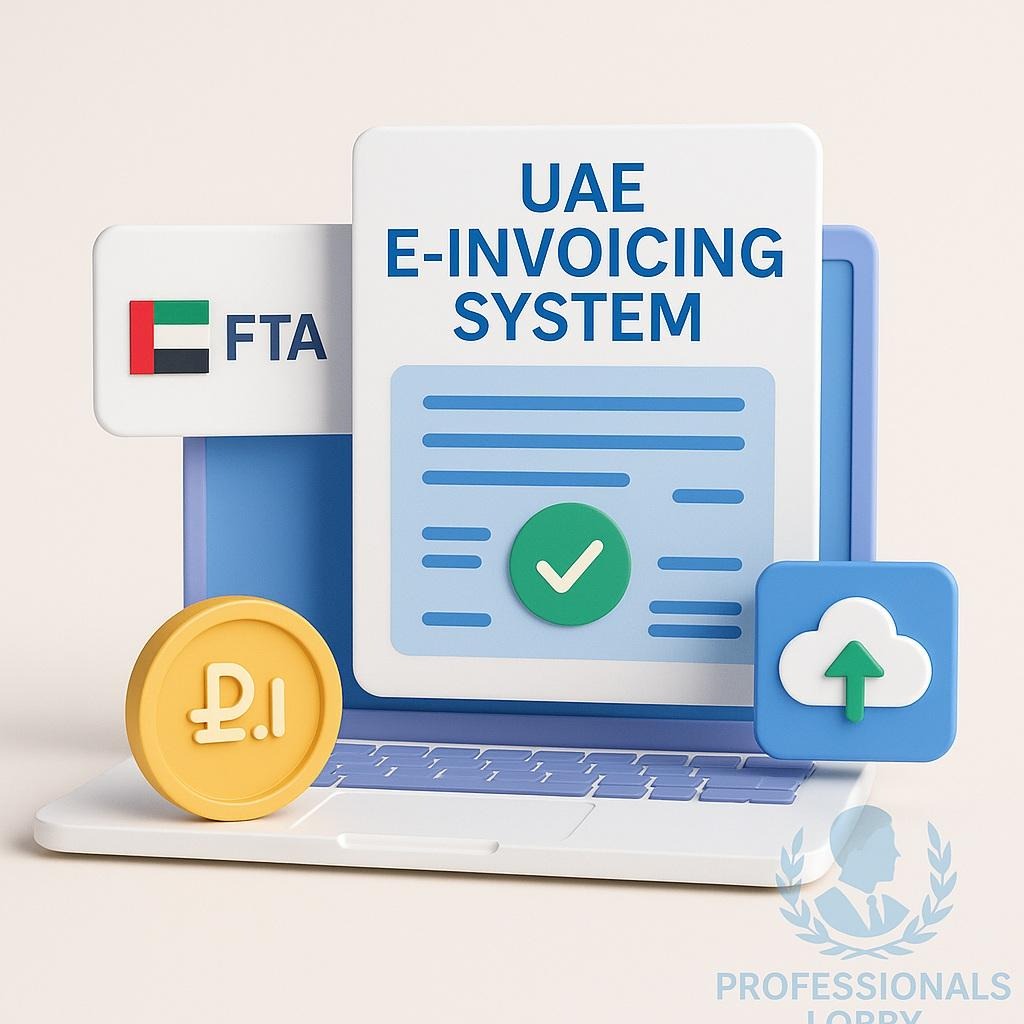
E-invoicing is a big part of the UAE’s move toward becoming a fully digital economy. Businesses need electronic invoicing now more than ever as they get used to new tax rules and laws.
E-invoicing is a great tool for businesses in the UAE because it makes financial tasks easier, more accurate, and gives reports in real time.
What is E-Invoicing?
E-invoicing, also known as electronic invoicing, is the process of creating, sending, receiving, and storing invoices in a structured way online. Machines can read e-invoices and systems can process them automatically, which makes them different from regular PDFs or paper invoices.
The Federal Tax Authority and other groups set rules for it to make sure that taxes are paid and that everything is clear.
E-invoicing makes sure that transactions are correct and can be tracked, which helps businesses follow VAT and corporate tax rules.
When you do invoices by hand, it’s easy to make mistakes. A lot less mistakes are made by people when they use automated systems.
Processing digital invoices is faster, which means you get your money faster and there are fewer delays.
Takes away the costs of printing, storing, and handling paper bills.
1 Invoices made automatically
2 Connecting with accounting software and processing data in real time
3 Safe digital storage and checks to make sure everything is in order
These features help companies run their businesses more smoothly and keep accurate financial records.
Structured digital formats are used by accounting or ERP software to make invoices.
The invoice is checked to make sure it follows UAE tax rules.
The invoice is sent to the customer or the right system by email.
The invoice is automatically read and processed by the recipient system.
We keep invoices safe so we can look at them later or for audits.
E-Invoicing and VAT Compliance
E-invoicing is very important for making sure that VAT is paid in the UAE:
Makes sure that VAT calculations are correct
Keeps the right formats for invoices
Helps with being ready for an audit
Makes reporting clear
This lowers the chance of getting in trouble and makes sure that rules are followed without any problems.
Businesses may have problems even though they are helpful, such as:
Not knowing enough about technology
Problems with integrating with current systems
Costs for setting up at first
Requirements for training staff
With the help of experts, though, these problems can be easily solved.
We offer full e-invoicing solutions for businesses in the UAE at Irtiqa Al Falah:
Setting up and using an e-invoicing system
Linking up with accounting software
Help with following the rules for VAT and corporate tax
Training and help with technical problems on an ongoing basis
We want to help your business make the switch to digital taxes as easily as possible.
Businesses in the UAE need e-invoicing not only for technological reasons, but also for strategic ones. It makes things run more smoothly, makes sure everyone follows the rules, and gets businesses ready for the future of digital taxes.
E-invoicing will put your business ahead of changes in the law and help you manage your money better overall.