Benefits of E-Invoicing for Small and Medium Businesses in the UAE
Introduction
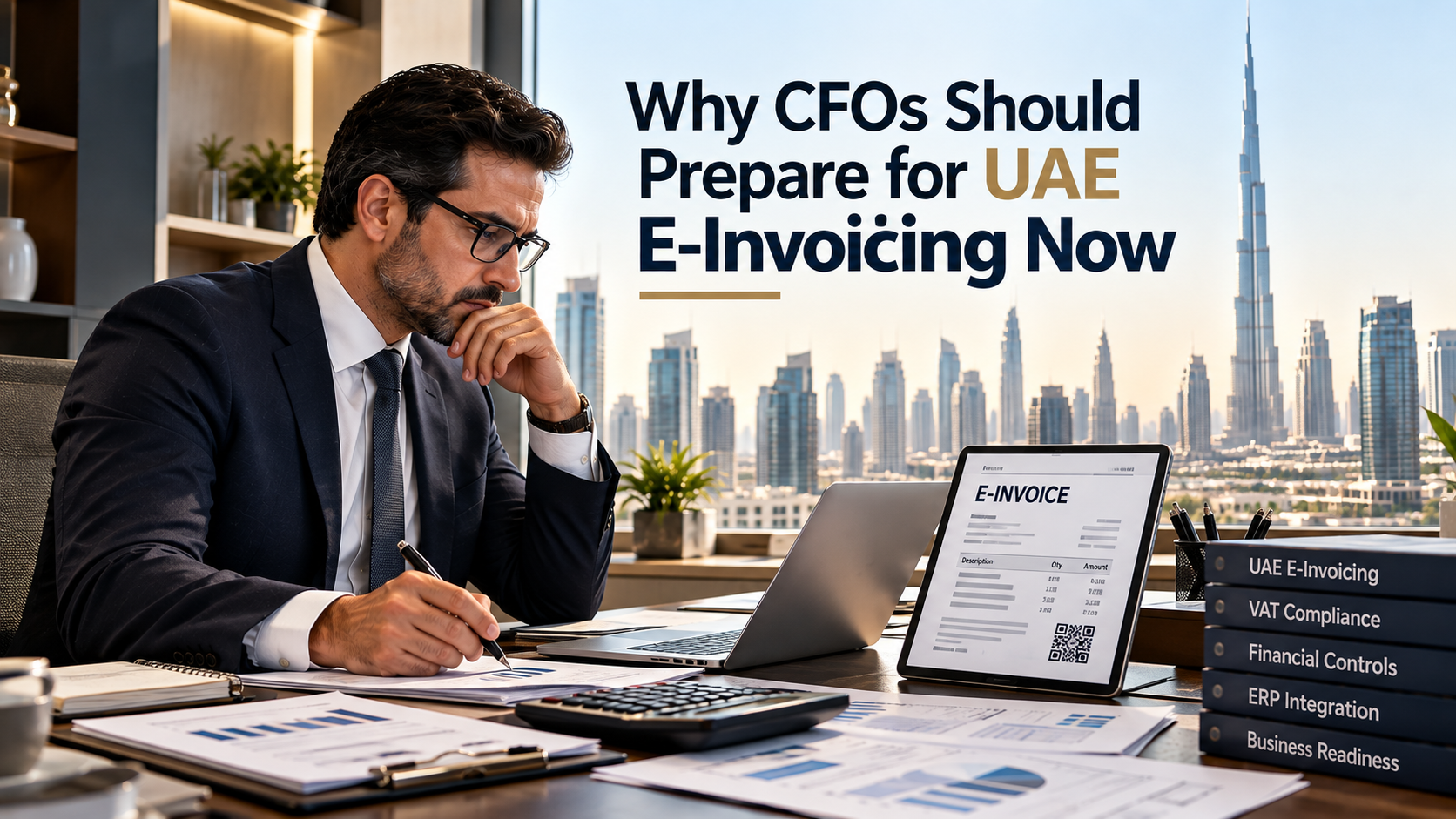
Small and medium-sized enterprises (SMEs) form the backbone of the UAE economy. As businesses continue embracing digital transformation, managing financial operations efficiently has become more important than ever. One innovation that is rapidly changing the way businesses handle transactions is electronic invoicing (E-Invoicing).
E-Invoicing is more than simply sending invoices via email. It is a structured digital process that automates invoice creation, delivery, validation, and storage. For UAE SMEs, adopting e-invoicing can lead to faster payments, improved compliance, reduced operational costs, and stronger financial control.
This article explores the key benefits of e-invoicing and why it is becoming an essential tool for modern businesses in the UAE.
What Is E-Invoicing?
E-Invoicing is the electronic generation, exchange, and processing of invoices in a standardized digital format. Unlike traditional paper invoices or PDF files, e-invoices can be automatically processed by accounting and ERP systems without manual data entry.
This automation reduces administrative workload while improving accuracy and efficiency across financial operations.
Why UAE SMEs Are Moving Toward Digital Invoicing
The UAE has positioned itself as a global leader in digital transformation. With increasing focus on tax compliance, financial transparency, and smart business practices, SMEs are looking for technologies that simplify operations while supporting regulatory requirements.
E-invoicing aligns perfectly with these objectives by creating a more connected and efficient financial ecosystem.
1. Faster Invoice Processing and Payments
One of the biggest challenges faced by SMEs is delayed payments. Traditional invoicing methods often involve manual approval processes, paperwork, and communication delays.
E-invoicing speeds up the entire cycle by:
- Instantly delivering invoices
- Reducing approval bottlenecks
- Automating payment tracking
- Sending automatic reminders
As a result, businesses receive payments faster and improve cash flow management.
2. Reduced Administrative Costs
Printing, mailing, filing, and storing paper invoices can create significant operational expenses over time.
E-invoicing helps businesses save money by eliminating:
- Printing costs
- Paper usage
- Courier and postage charges
- Physical storage requirements
For growing SMEs, these savings can be redirected toward business expansion and innovation.
3. Improved Accuracy and Fewer Errors
Manual invoice preparation often leads to:
- Incorrect calculations
- Duplicate invoices
- Missing information
- Data entry mistakes
E-invoicing systems automatically validate information before submission, significantly reducing human errors.
This not only improves customer satisfaction but also minimizes disputes and payment delays.
4. Better VAT Compliance
Since the introduction of VAT in the UAE, businesses must maintain accurate financial records and documentation.
E-invoicing helps SMEs:
- Maintain organized records
- Track taxable transactions
- Generate audit-ready reports
- Simplify VAT return preparation
This reduces compliance risks and helps businesses remain prepared for audits and regulatory reviews.
5. Enhanced Cash Flow Visibility
Cash flow is critical for every SME. Without proper visibility, businesses may struggle with budgeting and financial planning.
Modern e-invoicing solutions provide:
- Real-time invoice tracking
- Outstanding payment reports
- Payment status updates
- Financial performance dashboards
These insights allow business owners to make informed financial decisions and improve liquidity management.
6. Stronger Data Security
Paper invoices can be lost, damaged, or accessed by unauthorized individuals.
E-invoicing platforms offer advanced security features such as:
- Encrypted data transmission
- Secure cloud storage
- Access controls
- Automatic backups
This ensures that sensitive financial information remains protected and easily accessible when needed.
7. Improved Customer Experience
Clients appreciate professional and efficient billing processes.
E-invoicing enhances customer experience by providing:
- Faster invoice delivery
- Clear payment details
- Multiple payment options
- Reduced billing disputes
A smoother payment process strengthens business relationships and encourages long-term customer loyalty.
8. Easier Financial Audits
Preparing documents for audits can be time-consuming when records are stored manually.
With e-invoicing, every invoice is digitally stored and searchable, making it easier to:
- Retrieve historical records
- Verify transactions
- Generate reports instantly
- Support audit requirements
This saves valuable time for both business owners and finance teams.
9. Supports Business Growth
As businesses expand, managing increasing transaction volumes manually becomes difficult.
E-invoicing systems can easily scale with business growth by handling:
- Higher invoice volumes
- Multiple customers
- Multiple locations
- Integrated accounting processes
This allows SMEs to grow without significantly increasing administrative workloads.
10. Contributes to Sustainability Goals
The UAE continues to promote sustainability initiatives across industries.
By reducing paper consumption and physical transportation requirements, e-invoicing supports environmentally responsible business practices while helping companies achieve their sustainability objectives.
Common Challenges SMEs Face Without E-Invoicing
Businesses that continue relying solely on traditional invoicing methods may encounter:
- Slow payment cycles
- High administrative costs
- Data entry errors
- Lost invoices
- Compliance risks
- Limited financial visibility
These challenges can negatively impact profitability and operational efficiency.
Choosing the Right E-Invoicing Solution
Before implementing an e-invoicing system, SMEs should evaluate:
- Integration with existing accounting software
- VAT compliance features
- Data security measures
- User-friendly interface
- Automation capabilities
- Customer support services
Selecting the right solution ensures maximum return on investment and long-term business value.
Conclusion
E-invoicing is no longer just a convenience—it is becoming a strategic necessity for small and medium businesses in the UAE. From faster payments and reduced costs to stronger compliance and improved cash flow visibility, the benefits extend across every aspect of business operations.
As the UAE continues its digital transformation journey, SMEs that adopt e-invoicing early will be better positioned to improve efficiency, strengthen financial management, and maintain a competitive advantage in an increasingly digital marketplace.
Investing in e-invoicing today can help businesses build a smarter, faster, and more resilient future.
FAQs
Is e-invoicing mandatory in the UAE?
The UAE is moving toward greater digitalization of financial processes, and businesses should stay updated on regulatory developments regarding e-invoicing requirements.
How does e-invoicing improve cash flow?
By accelerating invoice delivery, approval, and payment processes, businesses can receive payments more quickly.
Can e-invoicing help with VAT compliance?
Yes. E-invoicing simplifies record-keeping, transaction tracking, and VAT reporting.
Is e-invoicing suitable for small businesses?
Absolutely. SMEs can benefit significantly from automation, cost savings, and improved financial visibility.
What is the biggest advantage of e-invoicing?
The combination of efficiency, accuracy, faster payments, and compliance support makes e-invoicing highly valuable for modern businesses.
Need Professional Business Support?
Irtiqa Al Falah offers trusted PRO, accounting, bookkeeping, auditing, and tax consultancy services across the UAE. Contact our team today and discover how we can help your business stay compliant, efficient, and growth-focused.
Office #18, Greece Cluster, K12 International City, Dubai, UAE
Phone: +971 4 570 5345
Whatsapp: +971 56 733 7438