Introduction
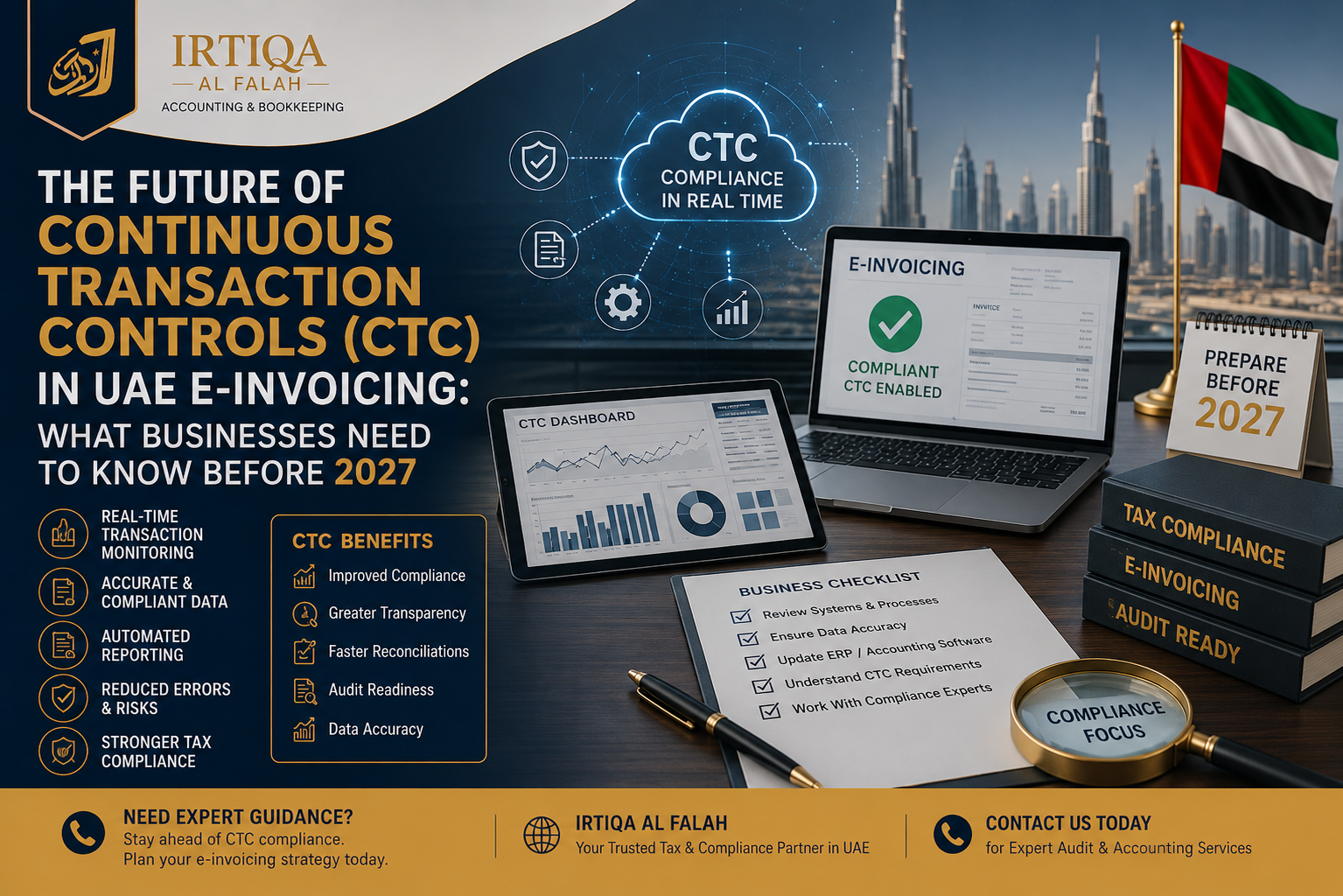
The UAE is making rapid strides towards developing its digital economy with some key tax and regulatory changes. Following VAT and Corporate Tax, the next big step for the UAE will be e-invoicing in a Continuous Transaction Control system (CTC).
A CTC system is not simply switching from paper-based to electronic invoices. It is an innovative method of tax administration where the invoice information is shared through an electronic standard format.
With the UAE preparing for its next big change in e-invoicing, companies need to be aware of the effect that the CTC system will have on their finances.
What Are Continuous Transaction Controls (CTC)?
Continuous Transaction Controls (CTC) refer to an online tax administration process that allows for tax authority to access transaction details in the form of invoice in digital format immediately after transactions take place.
This is contrary to the existing approach where companies create their own invoices and then submit tax details at a later date.
This approach helps ensure:
- Greater accuracy in financial reporting
- Reduced tax reporting errors
- Better VAT compliance
- Increased transparency
- Faster verification of transactions
Many countries have already adopted CTC models to strengthen tax administration, and the UAE is following this global trend as part of its digital transformation strategy.
Why Is the UAE Introducing CTC?
The UAE Government is investing heavily in digital infrastructure to improve tax compliance while making business operations more efficient.
The objectives behind adopting a CTC-based e-invoicing system include:
- Reducing tax fraud
- Improving VAT compliance
- Enhancing transparency across business transactions
- Simplifying tax administration
- Supporting paperless business operations
- Aligning with international best practices
For businesses, this means moving towards more automated and reliable financial reporting processes.
How Will CTC Work in the UAE?
While the process continues to be fine-tuned, the UAE system should be implemented using a decentralized exchange system.
In practice, this will mean that:
- Invoices will be created digitally.
- Approved accounting or ERP software will be used.
- Invoices will be exchanged in a structured digital form.
- Digital records will be kept securely.
- Invoice data will meet all regulatory requirements.
Instead of manually creating and keeping paper invoices, invoices will be generated and managed digitally.
Key Benefits of CTC for UAE Businesses
1. Improved Compliance
Automated invoice validation reduces the likelihood of reporting errors and helps businesses meet regulatory requirements more efficiently.
2. Better Financial Accuracy
Structured electronic invoices minimize manual data entry, reducing human errors in accounting records.
3. Faster Invoice Processing
Automation allows invoices to move quickly between suppliers, customers, and accounting systems, improving payment cycles.
4. Stronger Internal Controls
Digital invoice tracking creates a clear audit trail for every transaction, making financial reviews and audits more efficient.
5. Reduced Administrative Costs
Businesses can significantly reduce paperwork, printing, storage, and manual processing expenses.
6. Improved Business Insights
Digital invoice data enables better reporting, analytics, and financial decision-making.
Challenges Businesses May Face
While the long-term benefits are significant, businesses should prepare for several implementation challenges.
These may include:
- Upgrading accounting software
- Integrating ERP systems
- Staff training
- Data quality improvements
- Standardizing invoice formats
- Reviewing internal financial processes
Businesses that begin preparations early are likely to experience a smoother transition.
Industries That Will Be Most Affected
Almost every VAT-registered business will eventually be impacted, particularly:
- Trading companies
- Manufacturing businesses
- Retail businesses
- Construction companies
- Professional service firms
- Healthcare providers
- Logistics companies
- Hospitality businesses
- E-commerce businesses
Organizations with high transaction volumes may benefit the most from automation.
How Businesses Can Prepare Today
Although mandatory implementation may still be approaching, businesses should begin preparing now.
Practical steps include:
Review Current Accounting Software
Ensure your accounting system can support structured electronic invoicing and future compliance requirements.
Improve Data Accuracy
Clean customer records, supplier information, VAT details, and invoice templates.
Strengthen Internal Controls
Standardize invoice approval workflows and documentation procedures.
Train Finance Teams
Employees should understand digital invoicing processes and future compliance expectations.
Work with Professional Advisors
Accounting and tax professionals can help businesses assess readiness and plan system upgrades before implementation becomes mandatory.
The Future of Digital Tax Compliance in the UAE
CTC is likely to emerge as an integral part of the UAE’s overall digital taxation system.
In addition to this, the developments in cloud accounting, artificial intelligence, automation, and ERP systems will make it imperative for firms to move towards digital financial processes instead of the manual process of compliance.
Firms that adapt to this change at an earlier stage are sure to reap benefits through increased efficiency and reduced compliance risk.
Conclusion
The implementation of Continuous Transaction Controls (CTC) is a vital milestone in the digitalization process of the UAE. The organizations that will be aware of the upcoming regulations and will be equipped with up-to-date accounting systems, proper documentation, and streamlined internal processes will have more chances to comply in the future.
The preparation in advance will make it easier to transition to the UAE e-invoicing system, which will also help to improve overall financial management.
Regardless of whether your company is a startup, SME, or a corporation, it is the perfect moment to assess your invoice processes and make sure your organization is ready for the future.