Introduction
This process of closing at the end of the month helps Dubai businesses to confirm that their financial records are complete and accurate before preparing reports or making business decisions.
A thorough monthly review can help find missing transactions, outstanding invoices, mistakes in accounting and problems with cash flow.
Here is a simple checklist every Dubai business can follow.
1. Check All Sales and Expenses
Ensure that all sales invoices, purchase bills, receipts, and business expenses for the month have been recorded.
Check for:
- Missing invoices
- Duplicate entries
- Unrecorded expenses
- Credit notes
- Refunds
Accurate bookkeeping makes the month-end process much easier.
2. Reconcile Bank Accounts
Compare your accounting records with your bank statements.
Look for:
- Missing payments
- Bank charges
- Unrecorded deposits
- Duplicate transactions
- Differences in balances
Every difference should be investigated and explained.
3. Review Customer Payments
Review your accounts receivable to see which customers have paid and which invoices are overdue.
A simple ageing report can help you identify customers who need follow-up on payment.
4. Check Supplier Payments
Check and review unpaid supplier invoices and record all expenses for the month.
This helps you gain a sense of how much the business currently owes.
5. Review VAT Records
VAT-registered businesses should regularly check their VAT records rather than waiting until the filing deadline.
Review:
- Sales VAT
- Purchase VAT
- Tax invoices
- Credit notes
- VAT adjustments
Proper records can also make future VAT consultancy services in Dubai or tax reviews easier.
6. Keep Corporate Tax Records Updated
UAE Corporate Tax: Dubai businesses must maintain accurate financial records and supporting documentation.
The FTA states that corporate tax records should generally be retained for at least seven years after the end of the relevant tax year.
Regular bookkeeping keeps these records in order.
7. Check Payroll and Employee Expenses
Review:
- Salaries
- Employee expenses
- Allowances
- Deductions
- Staff-related payments
Ensure that payroll entries are consistent with the actual payments.
8. Review Profit and Cash Flow
Look at your monthly:
- Revenue
- Expenses
- Profit or loss
- Cash balance
- Outstanding payments
Remember, a business can be profitable but still have cash-flow problems if customers are paying late.
9. Check Important Documents
Make sure invoices, receipts, contracts, bank statements and other supporting documents are organised properly.
Effective documentation can streamline accounting reviews and internal audit services in Dubai.
10. Prepare for E-Invoicing
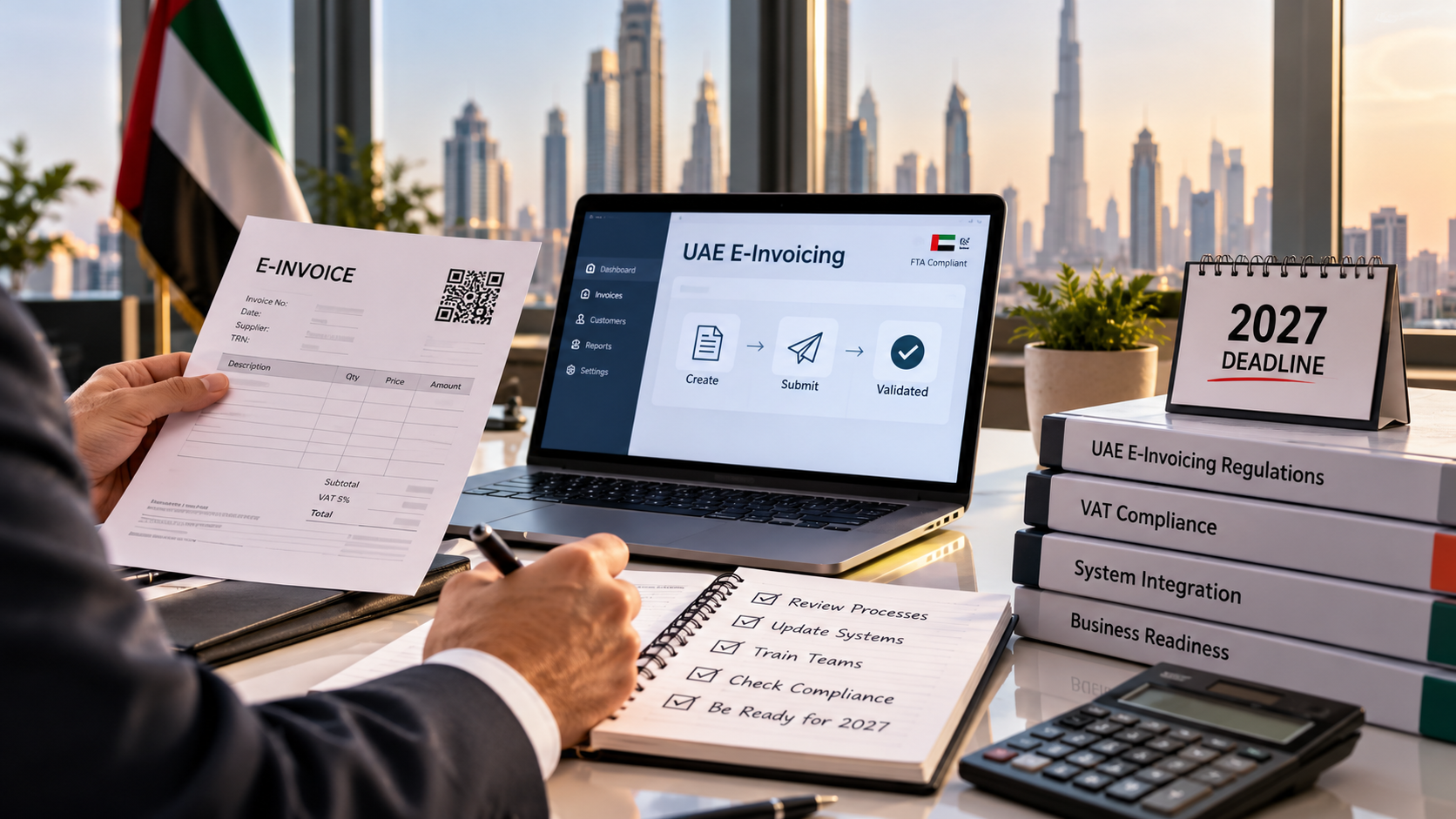
The UAE is introducing electronic invoicing through phased rollout. Businesses should check their accounting systems and invoicing processes to be ready for the new requirements.
This makes the Dubai e-invoicing services more relevant for the businesses planning their accounting processes.
Simple Month-End Checklist
| Area | Check |
| Sales | All invoices recorded |
| Expenses | Bills and expenses recorded |
| Bank | Accounts reconciled |
| Customers | Outstanding payments reviewed |
| Suppliers | Unpaid bills checked |
| VAT | VAT records reviewed |
| Corporate Tax | Financial records updated |
| Payroll | Salary records checked |
| Cash Flow | Cash position reviewed |
| Documents | Supporting records organised |
| E-Invoicing | System readiness checked |
Final Thoughts
Month-end close does not need to be complicated.
The aim is to ensure that your sales, expenses, bank transactions, taxes, payments and financial records are accurate and current.
Having a regular month-end process can give Dubai business owners a clearer picture of their financial position and help them make better decisions.
For companies in need of professional help, Dubai Bookkeeping, VAT consultancy and tax services, and accounting services in Dubai can help keep accurate and organised financial records.
Close your books properly each month to get a clearer picture of your business.