E-Invoicing Readiness Assessment: How UAE Businesses Can Prepare for 2027
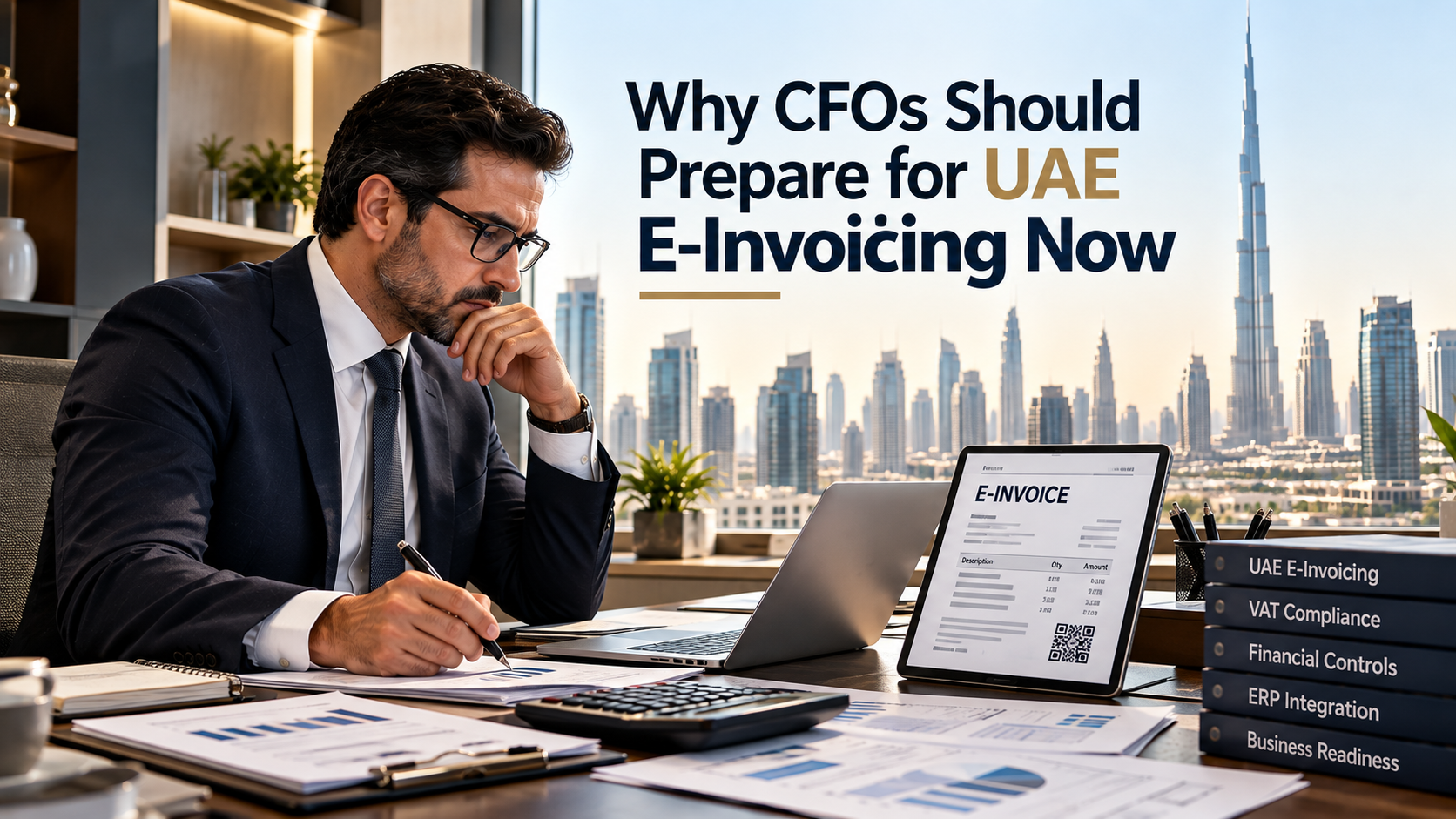
The UAE is moving towards a structured electronic invoicing system, and businesses should start preparing before their applicable implementation deadline. An E-Invoicing Readiness Assessment helps a company understand whether its accounting systems, invoice data, processes and internal controls are ready for the transition.
E-invoicing is not simply sending a PDF invoice by email. Under the UAE framework, an e-invoice involves structured invoice data that can be electronically exchanged and processed through the approved framework.
For businesses in Dubai and across the UAE, an early readiness assessment can identify technical gaps, data-quality problems and process changes that need attention before implementation.
What Is an E-Invoicing Readiness Assessment?
An E-Invoicing Readiness Assessment is a structured review of your current invoicing and accounting environment.
It typically looks at:
- Current invoicing processes
- Accounting or ERP software
- Customer and supplier data
- VAT information
- Invoice formats
- Credit note processes
- Accounting integrations
- Internal approval workflows
- Data security and recordkeeping
- Finance-team readiness
- Accredited Service Provider requirements
The purpose is simple: identify what needs to change before your business moves to UAE e-invoicing.
Why Should UAE Businesses Conduct a Readiness Assessment?
Waiting until the implementation deadline can create unnecessary pressure. E-invoicing may require changes to software, invoice workflows, financial data and staff processes.
A readiness assessment can help businesses:
- Identify system gaps
- Improve invoice-data accuracy
- Review VAT information
- Prepare accounting software
- Understand integration requirements
- Identify process weaknesses
- Plan staff training
- Select an appropriate service provider
- Reduce last-minute implementation risks
For SMEs and growing businesses, combining e-invoicing preparation with professional Accounting and Bookkeeping Services in Dubai can also help create a more organized financial workflow.
UAE E-Invoicing Deadlines Businesses Should Know
The UAE is implementing e-invoicing in phases.
For businesses with annual revenue of AED 50 million or more, the current mandatory implementation date is 1 January 2027, while the deadline to appoint an Accredited Service Provider (ASP) is 30 October 2026.
Businesses with annual revenue below AED 50 million have a mandatory implementation date of 1 July 2027, with an ASP appointment deadline of 31 March 2027.
Government entities have a mandatory implementation date of 1 October 2027, with an ASP appointment deadline of 31 March 2027.
| Business Category | ASP Appointment Deadline | Mandatory E-Invoicing |
| Revenue AED 50 million or more | 30 October 2026 | 1 January 2027 |
| Revenue below AED 50 million | 31 March 2027 | 1 July 2027 |
| Government entities | 31 March 2027 | 1 October 2027 |
Businesses should always verify the latest UAE Ministry of Finance and Federal Tax Authority guidance before making compliance decisions because implementation requirements can change.
What Does an E-Invoicing Readiness Assessment Check?
1. Accounting Software and ERP Readiness
Your accounting or ERP system needs to be capable of supporting the required e-invoicing processes.
During an assessment, businesses should review:
- Current accounting software
- ERP capabilities
- API or system integration requirements
- Invoice-generation workflows
- Data-export capabilities
- Integration with an Accredited Service Provider
If your existing system is outdated or poorly integrated, identifying the issue early gives you more time to make improvements.
2. Invoice Data Quality
E-invoicing depends heavily on accurate and structured data.
Your business should review information such as:
- Legal business name
- Customer details
- Supplier information
- Tax registration information
- Invoice numbers
- Invoice dates
- Product or service descriptions
- Tax information
- Amounts and currency
- Credit notes
Incorrect or incomplete information can create processing and compliance problems.
This is why professional Dubai bookkeeping and accounting support can be valuable before e-invoicing implementation.
3. VAT Compliance
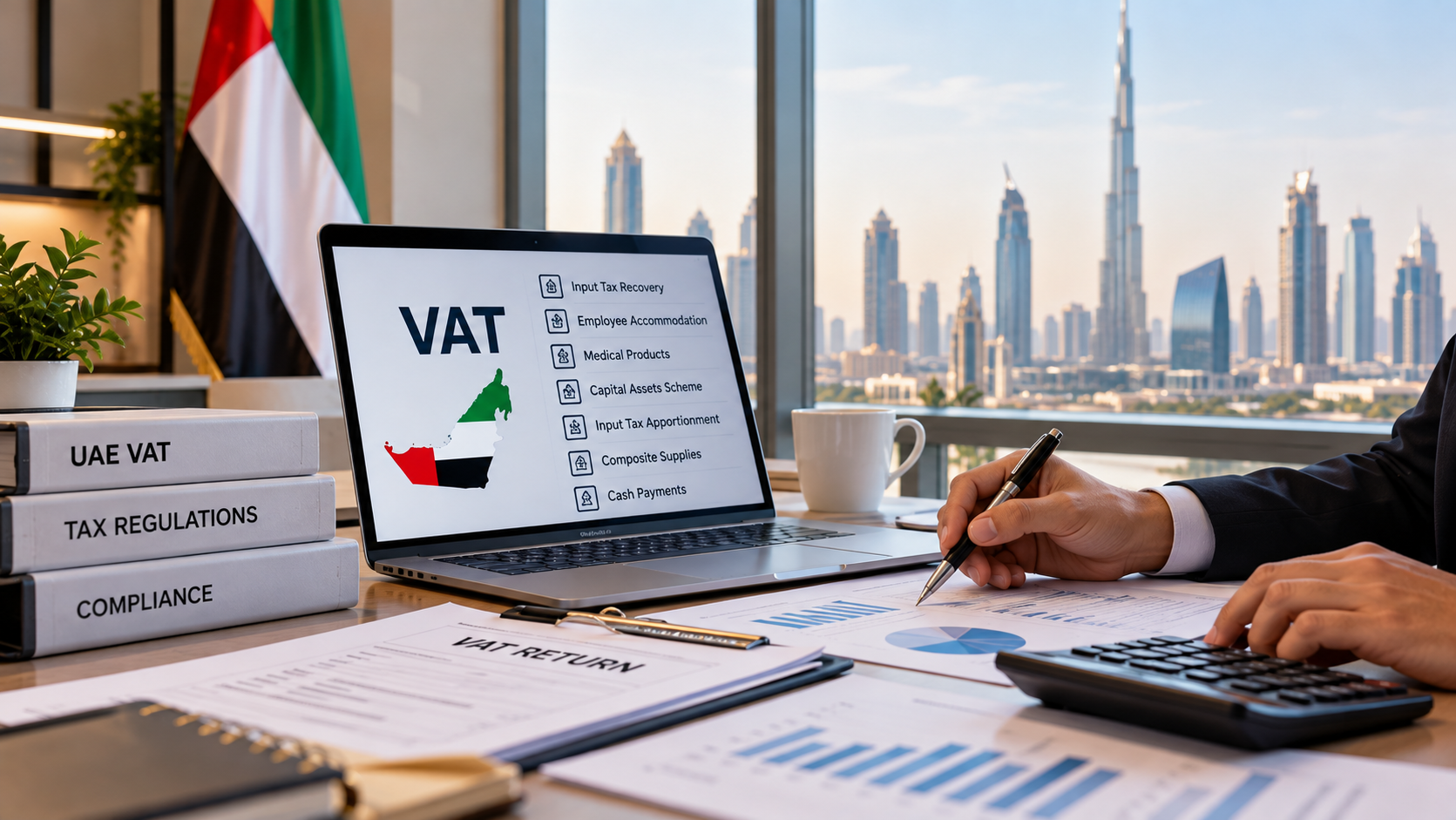
E-invoicing and VAT are not the same thing, but they are closely connected.
Where VAT applies, the relevant VAT information needs to be correctly reflected in invoice data.
Businesses should therefore review their VAT processes as part of their readiness assessment.
Professional VAT Consultancy Services in the UAE or VAT Consultancy Services Dubai can help businesses review their VAT processes alongside their e-invoicing preparation.
For businesses that need broader support, Tax Consultancy Services in Dubai can also form part of the wider compliance strategy.
4. Customer and Supplier Master Data
Poor-quality master data can become a major problem during digital invoicing.
Review whether your customer and supplier records are:
- Complete
- Accurate
- Consistent
- Properly classified
- Updated with relevant tax information
Cleaning this data before implementation can reduce errors and make system integration easier.
5. Invoice Approval Workflows
Businesses should also review how invoices are currently created and approved.
Ask:
- Who creates the invoice?
- Who checks it?
- Who approves credit notes?
- How are errors corrected?
- Where are invoices stored?
- How are invoices matched with accounting records?
An e-invoicing readiness assessment can identify manual steps that may need to be redesigned or automated.
6. Credit Notes and Adjustments
Businesses should not assess only standard sales invoices.
The review should also consider how the company handles:
- Credit notes
- Adjustments
- Cancellations
- Refunds
- Corrections
These processes should be understood before e-invoicing implementation begins.
7. Accredited Service Provider Readiness
Businesses entering the mandatory e-invoicing phases need to consider their Accredited Service Provider requirements.
An ASP can support electronic invoice exchange, system connectivity and other technical aspects of the UAE e-invoicing framework.
During your readiness assessment, consider:
- What accounting software do you use?
- What integrations are required?
- How many invoices do you process?
- What level of automation do you need?
- What security requirements apply?
- What support will your finance team need?
The objective is to choose a solution based on business requirements rather than simply selecting the first available provider.
E-Invoicing Readiness Checklist
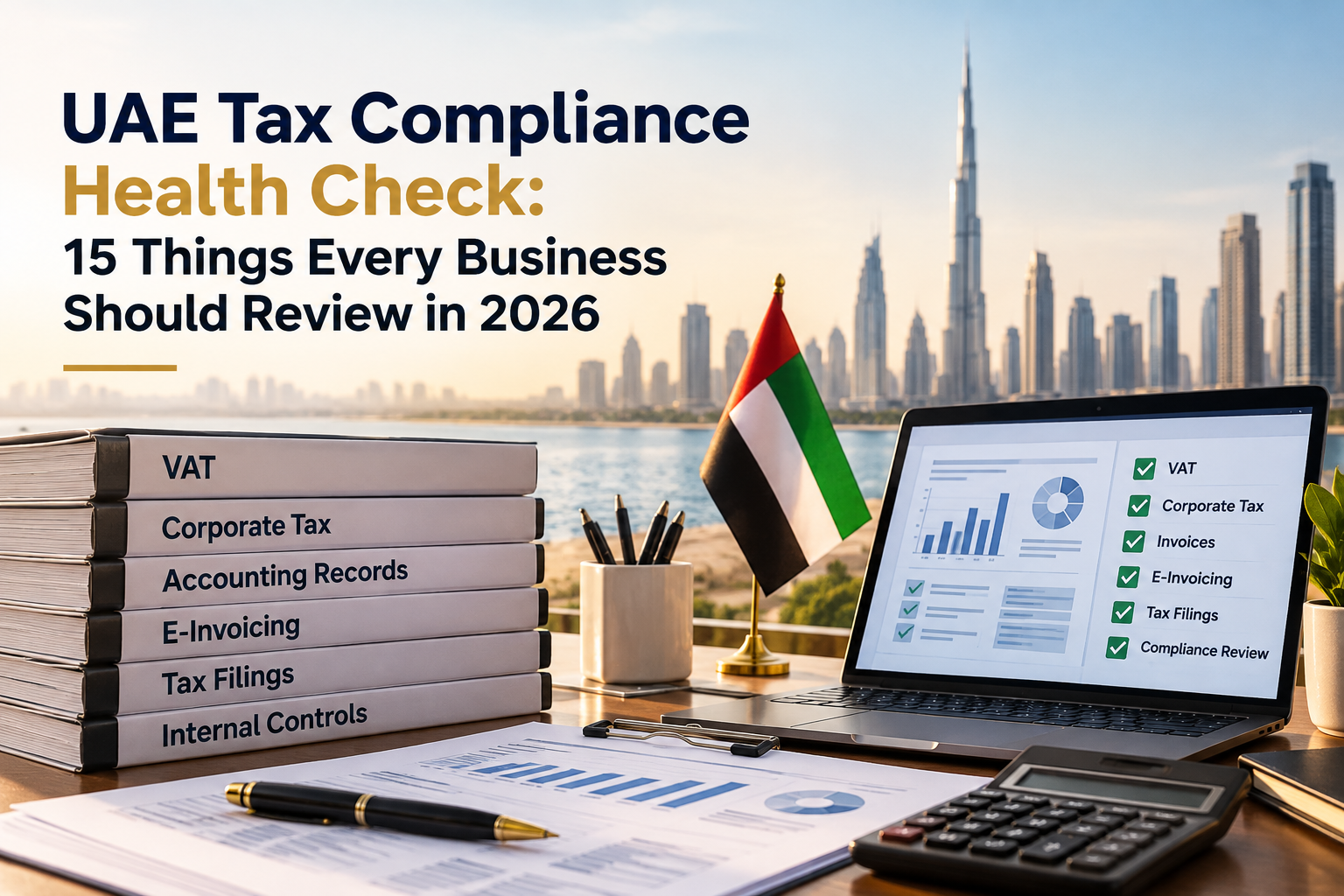
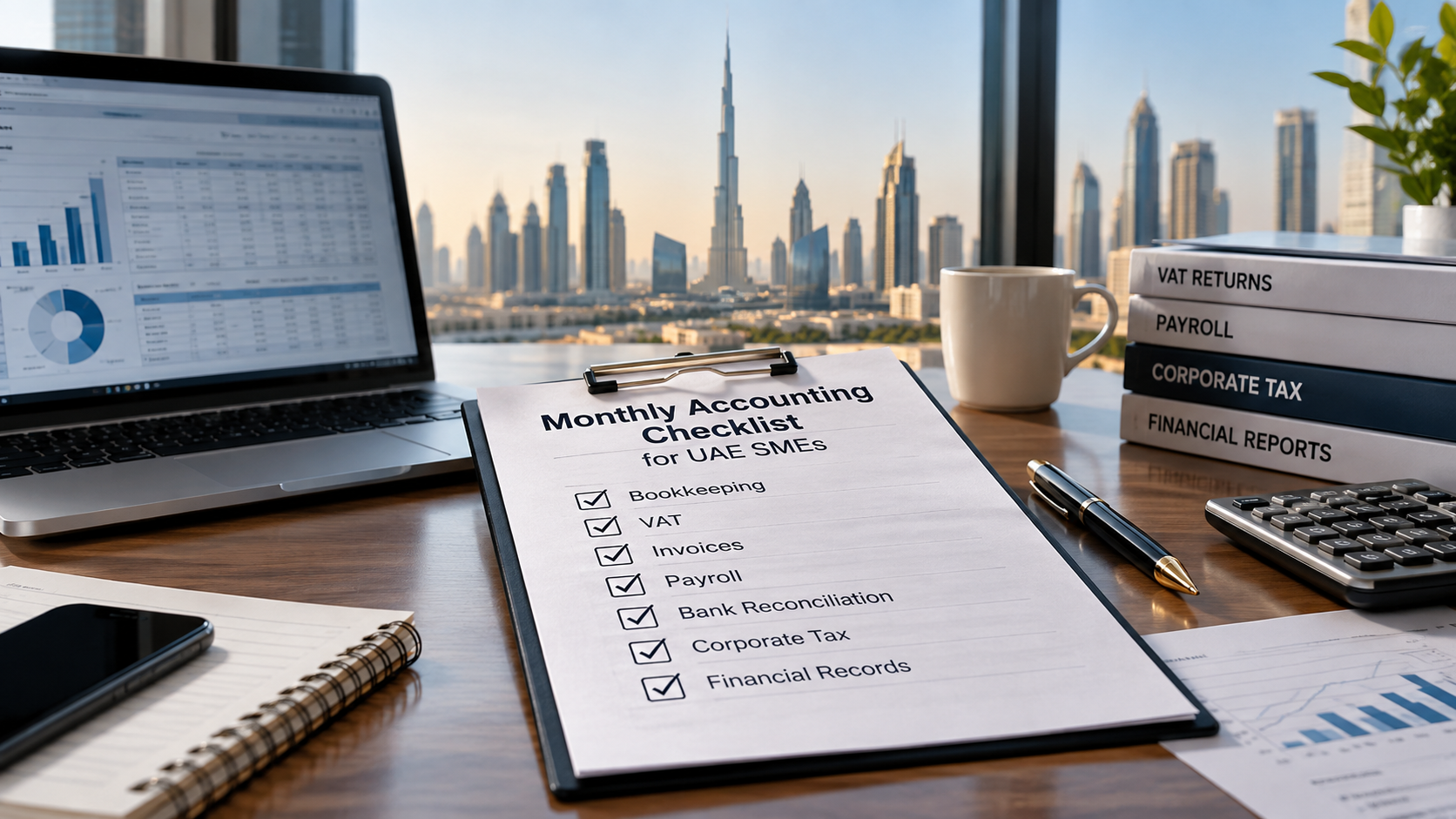
Before implementation, businesses can use this simple checklist:
- Determine your applicable revenue category
- Confirm your implementation deadline
- Review current invoice processes
- Review accounting or ERP software
- Check VAT data
- Clean customer and supplier records
- Review invoice numbering
- Review credit-note procedures
- Identify system integration requirements
- Assess internal approval workflows
- Review data-security procedures
- Identify an appropriate accredited service provider
- Test invoice data and workflows
- Train finance and accounting staff
- Create a process for handling errors
E-Invoicing Readiness for Dubai Businesses
Dubai businesses across different sectors are preparing for the transition. Whether your company operates in Business Bay, Jumeirah, Palm Jumeirah, Dubai Marina, Downtown Dubai, JLT or another commercial area, the underlying UAE e-invoicing framework is federal.
Businesses searching for E-Invoicing Services in Dubai, E-Invoicing Services in Downtown Dubai, E-Invoicing Services in Dubai Marina, E-Invoicing Services in Jumeirah, E-Invoicing Services in Palm Jumeirah or E-Invoicing Services in JLT should focus on actual system readiness and compliance rather than location alone.
Irtiqa Al Falah already provides E-Invoicing Services in Dubai covering implementation, invoice automation, system integration, invoice validation and compliance support.
How Accounting and Bookkeeping Support E-Invoicing
The quality of your accounting records closely connects to your e-invoicing readiness.
Professional accounting and bookkeeping support can help businesses maintain:
- Accurate sales records
- Correct customer data
- Organised supplier records
- Proper VAT information
- Consistent invoice records
- Better financial controls
Businesses looking for accounting services in Dubai, accounting & bookkeeping services Dubai or Bookkeeping Services Dubai can use their existing accounting review as a starting point for e-invoicing preparation.
For businesses in Business Bay, relevant support can include Bookkeeping Services in Business Bay where available.
Can an Internal Audit Help With E-Invoicing Readiness?
Yes. An internal review can identify weaknesses in financial controls and invoice processes before the transition.
Internal audit services in Dubai engagement may help businesses review areas such as:
- Invoice controls
- Approval procedures
- Data accuracy
- Segregation of duties
- Financial records
- Process compliance
- Error handling
This can be particularly useful for larger organisations with complex finance departments.
Businesses searching for internal audit firms in Dubai, internal audit services in Dubai or internal audit consulting firms should consider e-invoicing as part of their wider financial-control review.
What Happens After the Readiness Assessment?
A readiness assessment should result in a practical action plan.
The next steps may include:
Step 1: Identify Gaps
Document software, data and process issues.
Step 2: Prioritise Changes
Separate urgent compliance requirements from improvements that can be completed later.
Step 3: Select the Right Technology
Review accounting software, ERP integration and ASP requirements.
Step 4: Clean Financial Data
Correct customer, supplier, VAT and invoice information.
Step 5: Test the Process
Test invoice generation, exchange, validation and error handling.
Step 6: Train the Finance Team
Ensure employees understand the new workflow.
Step 7: Go Live Before the Deadline
Complete implementation with sufficient time for troubleshooting.
Frequently Asked Questions
It is a structured review of a business’s accounting systems, invoice data, processes, controls and technology to determine whether the business is prepared for UAE e-invoicing.
No. A PDF, scanned invoice, image or Word document is not automatically an e-invoice. UAE e-invoicing uses structured invoice data that can be electronically exchanged and processed through the applicable framework.
Businesses should start as early as possible, particularly those approaching the 2027 mandatory implementation deadlines. Early preparation provides more time to identify software, data and process gaps.
It should review accounting software, ERP integration, invoice data, VAT information, customer and supplier records, approval workflows, credit notes, data security and ASP requirements.
Yes. Accounting professionals can help businesses review financial processes, improve bookkeeping records, assess VAT data and coordinate accounting-system preparation.
No. E-invoicing is a digital invoicing framework, while VAT remains a separate tax obligation. Businesses need to consider both when preparing their invoicing processes.
Prepare Your Business for UAE E-Invoicing
E-invoicing readiness is not simply an IT project. It involves accounting, VAT, data quality, internal controls, software integration and staff workflows.
A professional readiness assessment provides businesses with a clear picture of their current status and what they need to complete before their applicable implementation deadline.
If your business operates in Dubai or elsewhere in the UAE, preparing early can make the transition more organised and reduce last-minute implementation pressure.
Do you need an E-Invoicing Readiness Assessment in Dubai?
Irtiqa Al Falah can help businesses review their accounting and invoicing processes, identify readiness gaps and prepare for UAE e-invoicing implementation.
Office: #18, Greece Cluster, K12 International City, Dubai, UAE
Call: +971 4 570 5345
WhatsApp: +971 56 733 7438
Get professional guidance on e-invoicing, accounting, bookkeeping and VAT compliance before your implementation deadline.