UAE E-Invoicing 2027 Deadline: What Businesses Should Do Now
The UAE is moving toward a more digital tax environment and businesses must prepare for the upcoming UAE e-invoicing 2027 deadline.
It’s not converting a PDF invoice into an electronic document, e-invoicing. It is about structured data on invoices, accounting systems, digital processes and connections between businesses and the UAE tax administration framework.
Businesses in Dubai and the UAE should begin making preparations well in advance of the implementation date. Reviewing accounting software, customer and supplier data, invoice processes and internal controls can now smooth the transition.
When Does UAE E-Invoicing Start?
The UAE’s e-invoicing system is being introduced in phases. According to the Federal Tax Authority’s implementation framework, businesses need to prepare their systems and processes ahead of the applicable implementation deadlines.
For businesses with revenue of AED 50 million or more, an Accredited Service Provider (ASP) appointment deadline falls on 30 October 2026, with e-invoicing implementation scheduled from 1 January 2027. Businesses below the specified threshold have later implementation dates under the phased framework.
This means businesses should not wait until 2027 to start preparing.
Why Should Businesses Prepare for E-Invoicing Now?
The transition can affect several parts of a business, including:
- Accounting software
- ERP systems
- Invoice generation
- Customer and supplier master data
- VAT information
- Finance workflows
- Internal approval processes
- Record keeping
- Tax reporting
A business may have accurate accounting records today but still require system changes before it can generate and exchange compliant e-invoices.
Early preparation gives finance teams time to identify these gaps and resolve them without disrupting normal operations.
1. Understand Which E-Invoicing Requirements Apply to Your Business
The first step is to understand how the UAE e-invoicing framework applies to your company.
Businesses should review:
- Revenue thresholds
- Implementation timelines
- Transaction types covered
- Applicable exclusions
- Reporting requirements
- Accredited Service Provider requirements
- Existing accounting and ERP capabilities
Do not assume that another company’s implementation plan will work for your business.
The correct approach is to assess your own transactions, systems and reporting requirements.
2. Review Your Current Invoicing Process
Before changing software, document how invoices are currently created and processed.
Ask:
Who creates the invoice?
What information is entered manually?
Which system generates the invoice?
How is VAT calculated?
How are invoices approved?
How are invoices sent to customers?
Where are invoices stored?
This process mapping can reveal manual steps that may create problems during e-invoicing implementation.
For example, if your finance team manually enters customer VAT information into invoices, master-data quality should be reviewed before the new system goes live.
3. Check Your ERP and Accounting Software
Your accounting system will play an important role in e-invoicing compliance.
Businesses should check whether their existing accounting or ERP system can support the required electronic invoicing processes.
Review:
- Invoice generation
- VAT calculations
- Customer data
- Supplier information
- Tax registration numbers
- Credit notes
- Debit notes
- Invoice numbering
- Digital data exchange
- Reporting
- Data storage
If your current software cannot support the required functionality, you may need an upgrade, integration or alternative solution.
This is also where professional Accounting Services in Dubai can help businesses review their accounting processes before implementation.
4. Clean Your Customer and Supplier Data
Poor data quality can become a major problem during digital tax implementation.
Before e-invoicing goes live, businesses should review customer and supplier master data.
Check whether records contain accurate:
- Legal business names
- Addresses
- Tax Registration Numbers
- Contact details
- VAT status
- Customer classifications
- Supplier information
Duplicate records should also be identified and removed where appropriate.
Clean data can make the transition to structured electronic invoicing significantly easier.
5. Review Your VAT Invoice Information
E-invoicing does not eliminate the importance of VAT compliance.
Businesses should make sure their invoices contain accurate VAT information and that accounting systems correctly distinguish between relevant transaction categories.
Review how your system handles:
- Standard-rated supplies
- Zero-rated supplies
- Exempt supplies
- Reverse charge transactions
- Credit notes
- Debit notes
- VAT adjustments
Businesses that already have strong VAT processes will generally have a better foundation for e-invoicing implementation.
If your VAT processes need review, professional VAT Consultancy Services in Dubai can help identify potential compliance gaps.
6. Choose the Right Accredited Service Provider
Businesses required to use an Accredited Service Provider should begin evaluating suitable options early.
Do not select a provider based only on price.
Consider:
- Integration with your ERP
- Technical capabilities
- Implementation support
- Security
- Scalability
- Customer support
- Reporting capabilities
- Experience with UAE businesses
- Compatibility with your invoicing volume
The right provider should fit into your existing finance workflow rather than creating unnecessary manual processes.
7. Test Your ERP and E-Invoicing Integration
Once the technology solution has been selected, testing should begin before the final implementation date.
Businesses should test common scenarios such as:
- Standard sales invoices
- Credit notes
- Debit notes
- Customer data changes
- VAT calculations
- Multiple business transactions
- Error handling
- Invoice cancellation or correction
- Data transmission
- Record retention
Testing should involve both the finance and IT teams.
A technically successful integration is not enough if finance employees cannot use the workflow efficiently.
8. Train Your Finance Team
Technology alone cannot make a business e-invoicing ready.
Employees who create, approve, review or reconcile invoices should understand the new process.
Training should cover:
- How invoices are generated
- How customer data is maintained
- How VAT information is checked
- How errors are handled
- How credit notes are processed
- How records are stored
- Who is responsible for resolving invoice failures
Clear responsibilities can prevent confusion after implementation.
9. Review Your Internal Controls
E-invoicing can change how financial information moves through a business.
Companies should therefore review internal controls around invoice creation, approval and correction.
For example:
- Who can create an invoice?
- Who can approve it?
- Who can change customer master data?
- Who can issue credit notes?
- Who reviews VAT information?
- Who handles rejected transactions?
Strong controls can reduce the risk of incorrect invoices entering the system.
Businesses may also benefit from reviewing their wider internal audit services in Dubai requirements when preparing their financial control environment.
10. Maintain Proper Accounting and Tax Records
E-invoicing will not replace the need for proper bookkeeping.
Businesses still need reliable financial records that allow transactions to be traced from invoice generation through accounting and reporting.
This makes professional bookkeeping particularly important during the transition.
A structured bookkeeping process for Dubai businesses can help ensure sales, purchases, VAT and supporting records remain organised.
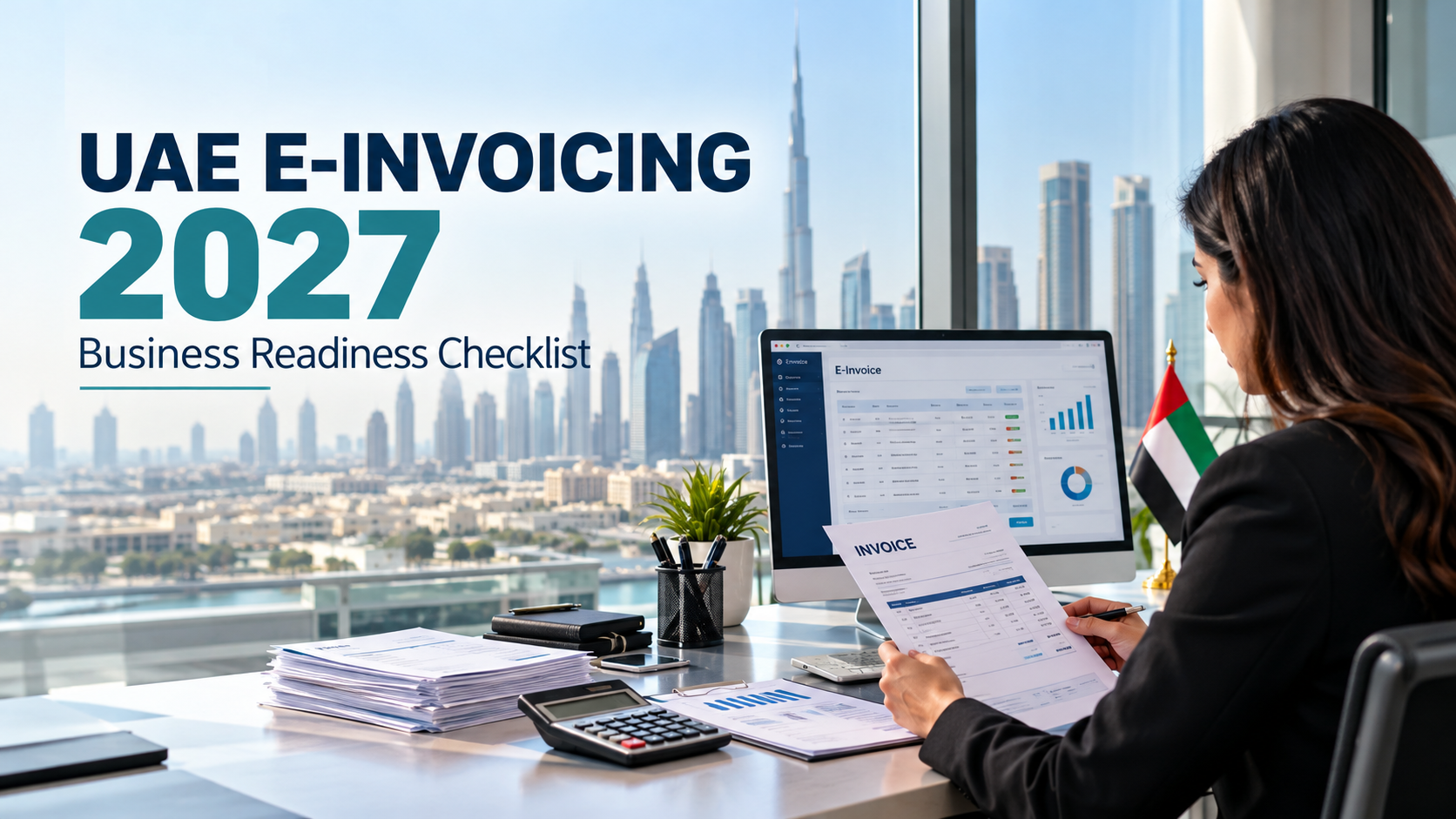
UAE E-Invoicing 2027 Preparation Checklist
Before the applicable implementation deadline, businesses should ideally complete the following:
- Identify the applicable e-invoicing timeline
- Understand the requirements relevant to the business
- Map the current invoicing process
- Review accounting and ERP systems
- Clean customer and supplier data
- Check VAT invoice information
- Evaluate an Accredited Service Provider
- Plan ERP integration
- Test electronic invoice workflows
- Train finance employees
- Review internal controls
- Establish error-handling procedures
- Review record-keeping processes
- Monitor official FTA updates
Common Mistakes Businesses Should Avoid
Waiting Until the Deadline
E-invoicing implementation may require technology changes, testing and employee training. Starting late can create unnecessary pressure.
Choosing Technology Without Checking Integration
A solution may look suitable but still create manual work if it does not integrate properly with your accounting or ERP system.
Ignoring Master Data
Incorrect customer or supplier information can affect invoice generation and reporting.
Treating E-Invoicing as an IT Project Only
Finance, tax, accounting and management teams all have a role in successful implementation.
Forgetting VAT Compliance
E-invoicing and VAT compliance are connected. Incorrect VAT treatment can still create tax problems even when an electronic invoice is successfully generated.
How Can Dubai Businesses Prepare for UAE E-Invoicing?
The best approach is to treat e-invoicing as a finance transformation project rather than simply a software upgrade.
Businesses should first understand their obligations, then review their existing invoicing process, accounting system, data quality and VAT controls.
After that, they can select the appropriate technology and service provider, complete integration testing and train their finance team.
Starting early gives businesses more time to identify technical or process-related problems before they become operational issues.
Frequently Asked Questions
The UAE is introducing e-invoicing through a phased implementation framework. Certain businesses have implementation requirements beginning 1 January 2027, while other businesses will follow later phases depending on the applicable criteria.
Businesses should review their invoicing process, accounting software, ERP integration, customer and supplier data, VAT information, internal controls and employee training.
Businesses subject to the applicable e-invoicing requirements will need to work with an Accredited Service Provider according to the UAE implementation framework.
No. E-invoicing is part of the UAE’s digital tax environment, but businesses must continue to comply with applicable VAT requirements and maintain appropriate accounting and tax records.
E-invoicing depends on structured transaction information. Incorrect customer, supplier or VAT data can result in errors and create additional work during implementation.
Final Thoughts
The UAE e-invoicing 2027 deadline should be treated as a preparation milestone rather than a date to start planning.
Businesses in Dubai and across the UAE should review their accounting systems, invoice processes, VAT information, master data and internal controls well in advance.
A structured preparation plan can make implementation easier, reduce disruption and help finance teams adapt to the UAE’s increasingly digital tax environment.
If your business needs support with accounting, VAT compliance or financial processes, Irtiqa Al Falah provides professional accounting and VAT consultancy services in Dubai to help businesses prepare for changing UAE compliance requirements.