Introduction
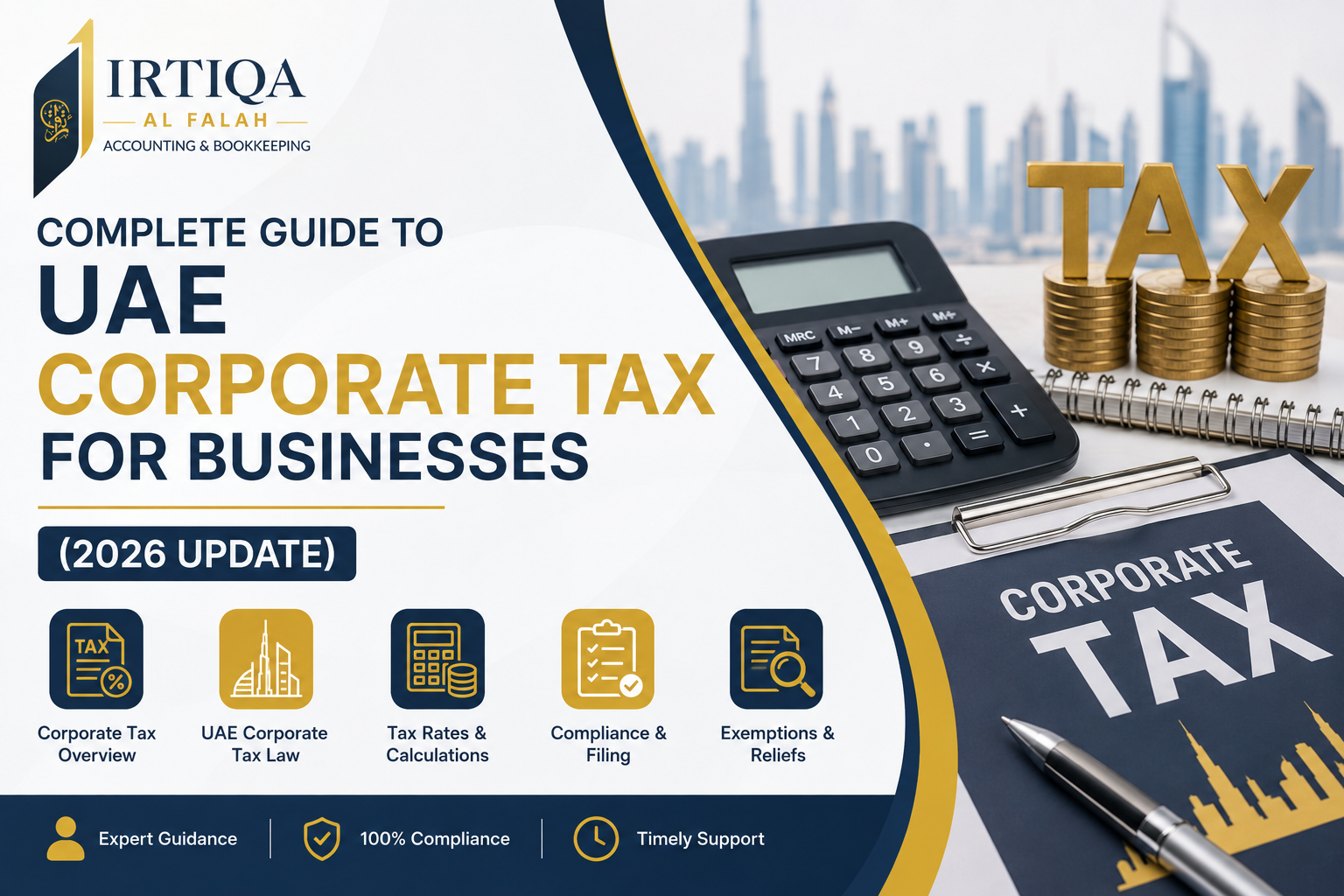
The introduction of Federal Corporate Tax in the UAE, effective for financial years starting on or after June 1, 2023, marked a historic shift in the nation’s fiscal landscape. Designed to align the UAE with international tax standards, corporate tax ensures transparency, compliance, and sustainable revenue generation while maintaining the country’s competitive edge as a global business hub.
What is Corporate Tax?
Corporate tax is a direct tax on the profits of corporations and businesses. Unlike VAT, which is a consumption tax, corporate tax applies to net income after allowable deductions.
- Standard Rate: 9% on taxable income above AED 375,000.
- Small Business Relief: Profits below AED 375,000 are exempt.
- Free Zone Entities: Qualify for 0% tax on qualifying income, but must comply with specific conditions.
Who Needs to Register?
- Mainland Companies – All businesses operating in the UAE mainland.
- Free Zone Companies – Subject to corporate tax unless exempt under qualifying income rules.
- Foreign Entities – If they earn income from the UAE, they may be subject to corporate tax.
Registration is mandatory, even for businesses that qualify for exemptions, to ensure compliance with the Federal Tax Authority (FTA).
Filing & Compliance
- Annual Tax Return: Businesses must file corporate tax returns electronically with the FTA.
- Record Keeping: Accurate accounting and bookkeeping are essential to track taxable income and deductions.
- Audit & Assurance: Independent audits strengthen compliance and reduce the risk of penalties.
Key Benefits of Corporate Tax
- Global Alignment: Positions the UAE as a transparent and reliable jurisdiction.
- Business Confidence: Encourages accurate reporting and financial discipline.
- Economic Diversification: Provides a sustainable revenue stream beyond oil.
Challenges Businesses Face
- Understanding exemptions and qualifying income rules for free zones.
- Managing cross‑border taxation and transfer pricing.
- Ensuring timely filings to avoid penalties.
Conclusion
Corporate tax in the UAE is more than just a legal requirement — it’s a framework that promotes transparency, compliance, and long‑term sustainability. For businesses, mastering corporate tax means not only avoiding penalties but also building credibility in a competitive market. Partnering with a trusted consultancy ensures smooth registration, accurate accounting, and reliable audit support.